

Indonesia Liveaboard
Plan your Indonesia liveaboard with Phinisi Trip — shared cabin departures, private phinisi charters, and dive cruises across 6 regions, year-round.
Evenings spent watching the sky turn gold over Komodo's quiet bays
130+ Phinisi Ships
Our commitment to comfort, safety, and unforgettable adventures has earned the trust of travelers from around the world.
4.9
1,458 reviews
An Indonesia liveaboard is a multi-day cruise on a boat you sleep aboard, sailing between islands and dive sites that day boats simply cannot reach. In the world’s largest archipelago — more than 17,000 islands sitting at the heart of the Coral Triangle, home to roughly 76% of all known coral species and over 3,000 reef fish species — a liveaboard is not a luxury add-on. It is the only realistic way to experience the best of Indonesian waters.
Phinisi Trip Indonesia operates a fleet of traditional phinisi liveaboards across six regions: Komodo, Raja Ampat, Lombok, the Banda Sea, Alor and Halmahera. Because we run the boats ourselves — we are the operator, not a booking marketplace — you get direct pricing, direct scheduling, and crews who dive these waters every week. And because Indonesia’s monsoons alternate between regions, a liveaboard in Indonesia is genuinely a year-round trip: when Komodo season winds down, Raja Ampat is just opening up.
Indonesia Liveaboard Destinations
Six regions, six very different trips. Here is where our phinisi fleet sails, what each destination is known for, and when to go.
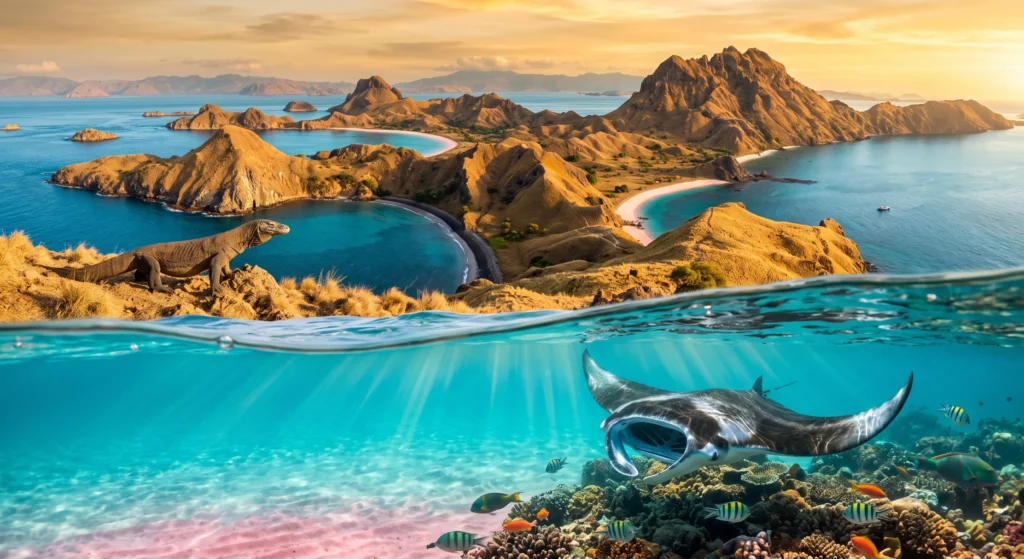
The classic Indonesian liveaboard and the best first trip: manta rays at Karang Makassar, adrenaline drift dives at Batu Bolong and Castle Rock, the Padar sunrise trek, pink-sand beaches, and Komodo dragons on Rinca and Komodo islands — all inside a UNESCO World Heritage national park. Short 3D2N and 4D3N itineraries from Labuan Bajo make it the most accessible liveaboard in Indonesia for divers, snorkelers, and mixed groups alike.
Season: April–November · Gateway: Labuan Bajo · From: $150 per person (3D2N, shared cabin) — see Komodo liveaboard packages
Sailing from Labuan Bajo? Every Komodo phinisi we run casts off from that harbour. Departure calendar, flight-to-boat timing and what happens if your flight is delayed are on the Labuan Bajo liveaboard page.
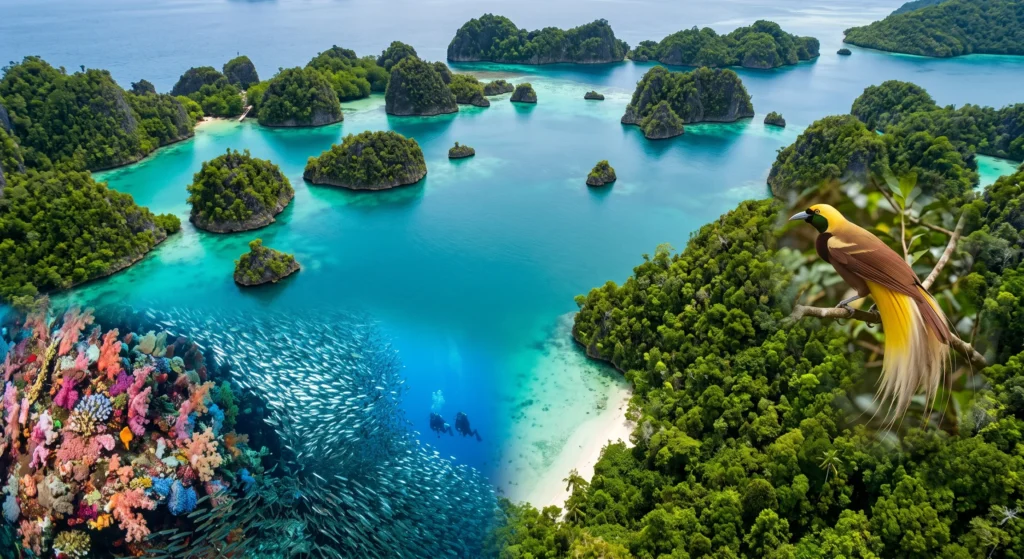
The most biodiverse reefs ever recorded. At Cape Kri in the Dampier Strait, scientists once logged 374 fish species on a single dive — a world record — and sites like Blue Magic, Manta Sandy, and the lagoons of Misool deliver wobbegongs, walking sharks, oceanic mantas, and coral cover you will not see anywhere else on earth. Remote, boat-only, and worth every flight it takes to get to Sorong. Choose your focus: Raja Ampat diving liveaboard for certified divers, or a Raja Ampat snorkeling liveaboard if you would rather stay on the surface.
Season: October–April · Gateway: Sorong · From: $900 per person (5D4N, shared cabin) — see Raja Ampat liveaboard packages
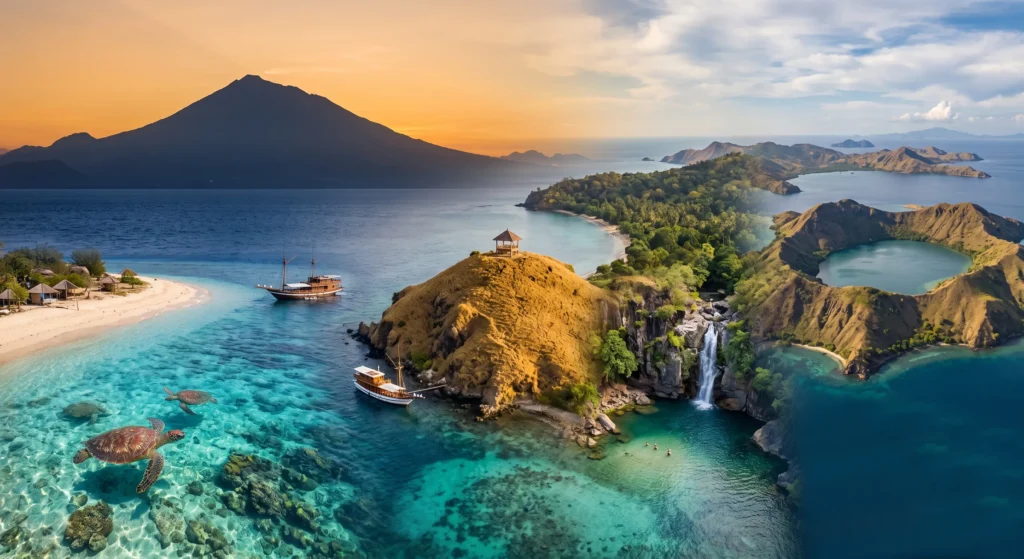
Lombok is the gateway to the most rewarding crossing in Indonesia: the multi-day sail east past Moyo Island’s waterfalls, Satonda’s volcanic crater lake, and Saleh Bay — famous for seasonal whale shark encounters — before entering Komodo National Park from the quiet western side. It is island-hopping, snorkeling, and open-water sailing rolled into one route most tourists never see. Our Lombok to Komodo boat trip runs this passage in both directions.
Season: April–November · Gateway: Lombok · From: $250 per person (4D3N, shared cabin) — see Lombok liveaboard packages
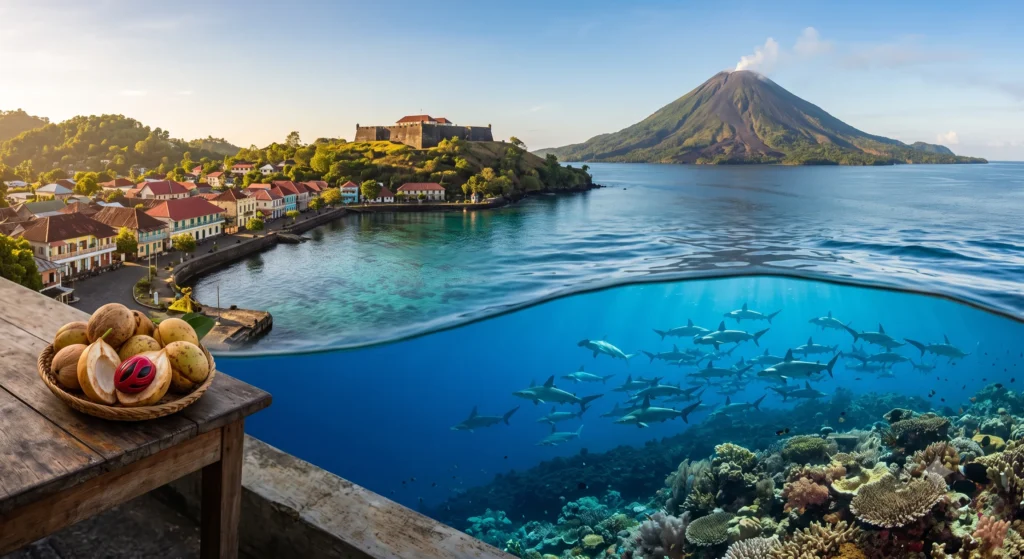
The Banda Sea is Indonesia’s blue-water frontier: volcanic seamounts rising from 4,000 metres, sea-snake colonies at Gunung Api and Manuk, and — in season — schooling scalloped hammerheads. Add Banda Neira’s nutmeg-trade history above water and you have the archipelago’s most atmospheric crossing. Banda trips run as longer expedition itineraries, usually between Ambon or Maumere, during the twice-yearly calm windows.
Season: September–November & March–April · Gateway: Ambon / Maumere · From: $1,400 per person (7D6N crossing) — Banda Sea liveaboard
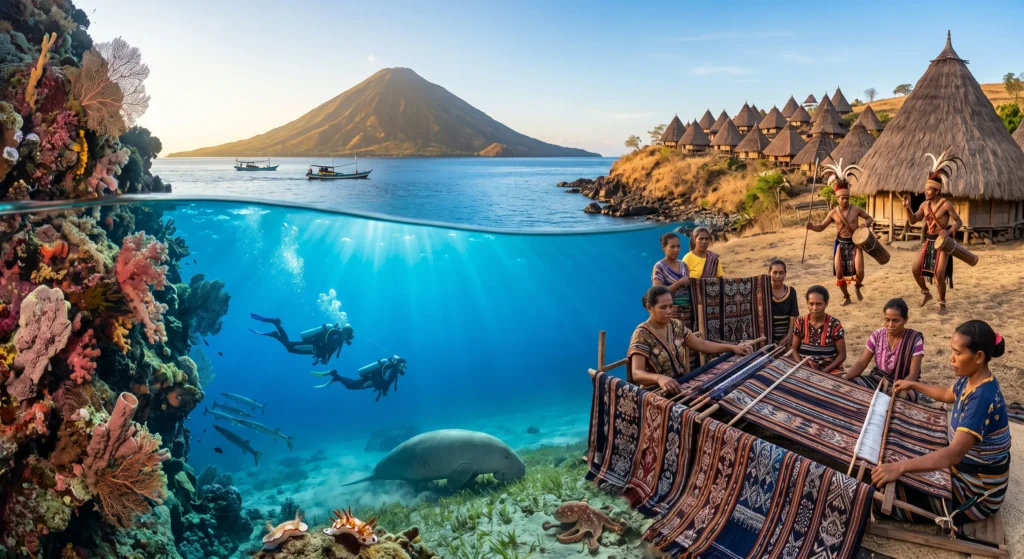
Alor is what Komodo felt like twenty years ago: crystal visibility, almost no other boats, and dives that swing from world-class muck in Kalabahi Bay — rhinopias, mandarinfish, frogfish — to current-swept pinnacles like Kal’s Dream where the pelagics come to you. Cool thermoclines keep the reefs pristine. Best suited to divers with some experience who want Indonesia without the crowds.
Season: April–November · Gateway: Kalabahi (via Kupang) · From: $1,200 per person (6D5N) — Alor liveaboard
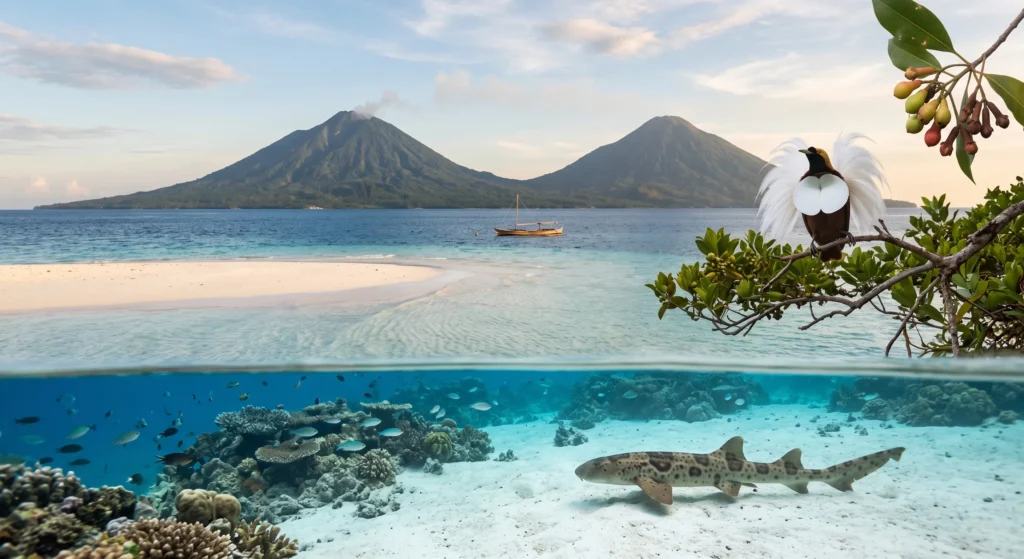
North Maluku’s sleeping giant. Halmahera’s reefs — the Goraici Islands, Weda Bay, and dozens of unnamed sites — carry some of the healthiest hard-coral cover in the Coral Triangle, dived by only a handful of boats each season. Trips typically depart Ternate and suit divers chasing exploration-grade reefs, endemic critters, and the feeling of having an entire sea to themselves.
Season: October–April · Gateway: Ternate · From: $1,300 per person (7D6N) — Halmahera liveaboard
Best Time for a Liveaboard in Indonesia
There is no single “best month” — Indonesia’s two monsoons alternate between regions, so the fleet rotates with the weather. That is the real answer aggregator sites miss: the season is always open somewhere. Use the table below to match your dates to the right region.
| Region | Prime season | Conditions | Signature encounters |
|---|---|---|---|
|
April – November |
Calm seas, 25–29°C, best visibility July–September |
Reef mantas year-round, sharks, Komodo dragons ashore |
|
|
October – April |
Calmest seas of the year, 27–30°C |
Manta aggregations December–March, wobbegongs, walking sharks |
|
|
Sep – Nov & Mar – Apr |
Glassy crossing windows between monsoons |
Schooling hammerheads, sea snakes, blue-water seamounts |
|
|
April – November |
Dry season, cool thermoclines, superb visibility |
Pelagics at Kal’s Dream, world-class muck in Kalabahi Bay |
|
|
October – April |
Sheltered northern waters |
Untouched hard-coral gardens, exploration diving |
|
|
April – November |
Dry-season passage conditions |
Whale sharks in Saleh Bay (seasonal), Moyo & Satonda |
Indonesia Liveaboard Prices
Liveaboard pricing in Indonesia is driven by three things: region (remoteness = fuel = cost), boat class, and cabin type. As a direct operator we publish rates in USD with no marketplace markup. Typical per-person, per-day rates on shared-cabin open trips:
| Boat class | Rate (per person / day, shared cabin) | What to expect |
|---|---|---|
|
Budget |
$50 – $70 |
AC shared cabins, full board, snorkel gear, guided treks |
|
Deluxe |
$120 – $250 |
Ensuite AC cabins, smaller groups, upgraded menus |
|
Luxury |
$300 – $500+ |
Master cabins, premium service, spa-grade comfort |
Indicative trip pricing by destination (shared cabin, per person):
| Destination | Popular itinerary | From (USD) |
|---|---|---|
|
Komodo |
3D2N liveaboard |
$150 |
|
Lombok ⇄ Komodo |
4D3N crossing |
$250 |
|
Raja Ampat |
5D4N liveaboard |
$900 |
|
Alor |
6D5N expedition |
$1,200 |
|
Halmahera |
7D6N expedition |
$1,300 |
|
Banda Sea |
7D6N crossing |
$1,400 |
Rates include full board, drinking water, snorkeling equipment, guided island treks, and harbour transfers. National park entrance fees are paid separately — in Komodo, the foreigner entrance fee is around IDR 650,000–750,000 per person per trip — along with dive equipment rental and alcoholic drinks. Prefer the whole boat to yourselves? Prefer the whole vessel? Compare the phinisi yacht charter fleet — private charters start from roughly $1,500 per day and scale with vessel class; every itinerary above can run as a private charter.
Diving in Indonesia: Inside the Coral Triangle
Scuba diving in Indonesia is, by the numbers, the richest on the planet. The archipelago sits at the apex of the Coral Triangle, and its dive regions read like a wishlist: reef mantas and drift dives in Komodo; record-breaking biodiversity, wobbegongs, and walking sharks in Raja Ampat; schooling hammerheads over Banda Sea seamounts; rhinopias and mandarinfish in Alor’s muck; and hard-coral gardens in Halmahera that few divers have ever seen. Between them you will find pygmy seahorses, dugongs, whale sharks, and more nudibranch species than any logbook can hold.
Experience level matters more by site than by region. Sheltered reefs across Komodo, Raja Ampat, and Halmahera suit newly certified divers and snorkelers, while current-swept icons — Batu Bolong, Castle Rock, Blue Magic, Kal’s Dream — are best with an Advanced certification and some drift experience. Our dive guides brief conservatively, group divers by experience, and adjust sites to conditions daily. Non-divers are genuinely welcome: on Komodo and Lombok routes especially, snorkelers see mantas, turtles, and reef fish from the surface on the very same sites.
Why Sail on a Phinisi, Not a Standard Dive Boat?
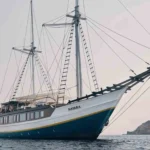
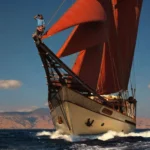
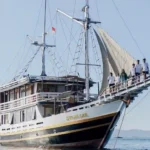
A phinisi is Indonesia’s traditional two-masted sailing ship, still hand-built from ironwood and teak by the boatwrights of Ara and Tana Beru in Bulukumba, South Sulawesi — a craft UNESCO inscribed as Intangible Cultural Heritage of Humanity in 2017. On the water, the difference from a steel dive boat is practical, not just romantic: a phinisi’s hull rides swells comfortably, her shallow draft anchors in coves big boats cannot enter, and her decks are built for living aboard — sunbeds, shaded lounges, and dinners under sail. Ours carry modern navigation, safety equipment, and certified crews, so you get the heritage without compromise. And because Phinisi Trip Indonesia owns and operates its fleet, standards for crew, food, and maintenance are ours to control — not outsourced to whichever boat a marketplace resells that week.
Popular Liveaboard Routes & Itineraries
Short on time? The Komodo 3D2N covers Padar, Pink Beach, Manta Point, and the dragons in one long weekend, while the 4D3N adds the park’s quieter north. The Lombok to Komodo crossing is the connoisseur’s route into the park. In eastern Indonesia, choose the Raja Ampat 5D4N for the Dampier Strait or the 7D6N to reach Misool. Twice a year, seasonal repositioning crossings link Komodo and Raja Ampat through the Banda Sea — the ultimate Indonesia liveaboard itinerary for divers with ten days or more.
What's Included (and the Fees Nobody Mentions)
Every trip includes: all meals on board (Indonesian and Western, cooked fresh by the boat’s own crew), drinking water, tea and coffee, tanks and weights for divers, snorkeling gear, tender transfers to every stop, airport or harbour pickup at your departure port, and licensed local dive guides.
Not included — budget for these:
- National park & marine fees, which vary by region — the Komodo park entrance, Raja Ampat's two permits (marine park card + visitor ticket), and small local port and village fees on Banda, Alor and Halmahera crossings. All paid separately, at cost; exact figures are on each destination page.
- Dive equipment rental and nitrox if you're diving. A few regions (Alor and the Banda Sea) run cold upwellings, so a 5mm wetsuit with a hood is recommended there.
- Alcoholic drinks, travel insurance with dive and evacuation cover (essential on remote routes), and flights to your departure port.
Discover Indonesia's Best Diving on a Premium Phinisi Liveaboard
Harnessing Decades at Sea to Craft Effortless Indonesia Liveaboard Adventures
- Save time with a fully organized itinerary
- Travel safely with licensed local dive guides
- Dive the right region for any month — we sail year-round
- Minimize stress with an all-inclusive package
- Create memories that last a lifetime
- Skip the guesswork of remote-Indonesia logistics
- Support local crews and coastal communities across Indonesia
Delivering Premium Phinisi Voyages for a Safer, More Memorable Journey
Empowering travelers with premium phinisi voyages that combine comfort, safety, and adventure — delivering unforgettable dive trips across Indonesia while supporting local crews and coastal communities.
Choose Your Indonesia Liveaboard Tier
Phinisi Trip Indonesia runs every route — from Komodo to Raja Ampat and the far eastern seas — across three vessel tiers, so you match the boat to your travel style, not the other way around.
VVIP Phinisi
The most exclusive tier: the largest cabins, the highest crew-to-guest ratio, and premium finishes for a fully private, top-of-the-line liveaboard anywhere in Indonesia.
Luxury Phinisi
Spacious cabins, refined interiors, and attentive service for a private Indonesia liveaboard without the VVIP price tag.
Deluxe Phinisi
Comfortable, well-equipped vessels covering every liveaboard essential at a more accessible rate — ideal for groups and families chartering the whole boat.
Frequently Asked Questions
Which liveaboard destination in Indonesia is best?
For a first liveaboard or a mixed group of divers and non-divers, Komodo is the best all-rounder: short itineraries, big marine life, and dragons on land. Dedicated divers chasing maximum biodiversity should choose Raja Ampat. Banda Sea crossings are for hammerheads and blue water; Alor and Halmahera are for experienced divers who want world-class sites without another boat in sight.
How much does an Indonesia liveaboard cost?
Shared-cabin open trips run from about $50–70 per person per day on budget phinisi to $500+ per day on luxury vessels. Complete trips start around $150 per person for a Komodo 3D2N and rise to $1,400+ for remote expedition routes like the Banda Sea. Private whole-boat charters start from roughly $1,500 per day.
When is the best time of year to go?
Year-round — the region just changes. Sail Komodo, Lombok, and Alor from April to November; Raja Ampat and Halmahera from October to April; and the Banda Sea in the crossing windows of September–November and March–April.
Do I need a diving certification?
No. Komodo and Lombok itineraries are built for snorkelers and non-divers as much as divers, and every guest joins the island treks. For diving, an Open Water certification covers most sheltered sites; an Advanced certification is recommended for current-swept sites in Komodo and Raja Ampat and for Banda and Alor expeditions.
What permits do I need for Komodo National Park?
Every visitor pays the park entrance fee — currently around IDR 650,000–750,000 per person per trip for foreign visitors — booked through the park’s online SiOra system. We arrange permits for all our guests as part of the trip; details are on our Komodo liveaboard page.
How do I get to the departure ports?
Labuan Bajo (Komodo) is a 1-hour flight from Bali or about 2.5 hours from Jakarta. Sorong (Raja Ampat) connects via Jakarta, Makassar, or Manado. Lombok has direct domestic and short Bali connections. Ambon and Maumere serve Banda Sea crossings, Kupang connects to Kalabahi for Alor, and Ternate is the gateway to Halmahera. We handle airport–harbour transfers at every port.
What is the difference between a phinisi and a regular dive boat?
A phinisi is a traditional Indonesian two-masted wooden sailing ship — a UNESCO-recognised craft — refitted with modern cabins, navigation, and safety systems. Compared with a standard steel dive boat, a phinisi rides more comfortably, anchors in shallower bays, and turns the journey itself into part of the trip rather than just transport between dive sites.
Plan Your Indonesia Liveaboard
Tell us your dates, group size and destination. We are the operator, not an agent — you get the direct rate with no marketplace markup, and a real itinerary back, usually within a few hours.