

Komodo Liveaboard —
Multi-Day Phinisi Cruises to Komodo National Park
Plan your Komodo Island tour with Phinisi Trip — shared boat trips, private Komodo boat tours, and Komodo dragon encounters across 9+ spots.
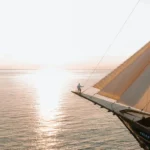
Evenings spent watching the sky turn gold over Komodo's quiet bays
130+ Phinisi Ships
Our commitment to comfort, safety, and unforgettable adventures has earned the trust of travelers from around the world.
4.9
1,458 reviews
Book a Komodo liveaboard on a traditional phinisi boat, departing from Labuan Bajo, Flores. We operate open trips from 2D1N to 4D3N and full private charters across 20+ vessels — from budget shared cabins to luxury phinisi with private decks. Every package covers the icons of Komodo National Park: Padar Island at sunrise, Komodo dragons on Rinca or Komodo Island, snorkeling with manta rays at Manta Point, and an overnight anchored inside the park.
You don’t need to be a diver. Most of our guests aren’t. If the top results you’ve seen only talk about scuba, this page is for everyone else — snorkelers, couples, families, and groups who want to sleep on the water inside a national park.
Check availability & prices → · WhatsApp response within >7 minutes.
Komodo Liveaboard Prices & Durations
Quick answer first. All trips start and end in Labuan Bajo.
| Duration | Route coverage | Best for | Price from |
|---|---|---|---|
|
2D1N |
Padar, Pink Beach, Komodo Island, Manta Point |
Short on time |
$145 /pax |
|
3D2N |
Full central park + Kanawa/Kelor |
Most popular — complete highlights |
$185 /pax |
|
4D3N |
Central + north Komodo (Gili Lawa) |
Slower pace, more snorkel/dive time |
$570 /pax |
|
Private charter |
Custom |
Groups 6–20 pax, honeymoons |
±$2,400 /boat |
Prices are per person for open trips, sharing cabin, and include meals, crew, snorkel gear, and tender boats. Park fees are extra — see the What’s Included section, because this catches people off guard.
Open Trip or Private Charter — Which One?
This is the first decision to make, and most booking sites never explain it.
Open trip means you join a scheduled departure and share the boat with other guests (usually 10–20 pax). Fixed itinerary, fixed dates, lowest cost per person. Solo travelers and couples almost always go this route.
Private charter means the whole phinisi is yours. You set the pace — skip the crowded Padar sunrise window, stay longer at Manta Point, add a stop the open trips skip. Per person it gets competitive once your group hits 8–10 pax, because you’re splitting a flat boat rate.
Rule of thumb: under 6 people, book an open trip. 8 or more, price out a charter first — it’s often cheaper per head than you’d expect, and you control the schedule.
Why a Phinisi — Not Just Any Boat
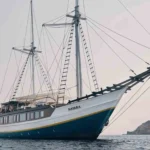
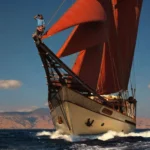
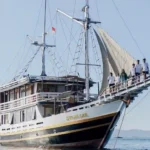
A phinisi is not a generic tour boat. It’s a traditional two-masted wooden schooner, a design perfected over centuries by the boat builders of Bira and Tana Beru in South Sulawesi. In 2017, UNESCO inscribed the art of pinisi boatbuilding on its list of Intangible Cultural Heritage — the same recognition tier as batik.
Practically, this matters for your trip in three ways:
-
Space and stability.
A wooden hull of 20–40 meters rides swells more comfortably than the fiberglass speedboats used for day trips. You'll feel the difference on the crossing to Padar.
-
Deck life.
The trip is the boat. Phinisi are built with wide open decks — sunbeds at the bow, dining aft, and on most of our fleet, a rooftop deck for sunset and stargazing inside the park, far from any light pollution.
-
You sleep inside the park.
Day-trip boats race back to Labuan Bajo every afternoon. A liveaboard anchors overnight in a quiet bay — which is why liveaboard guests get Padar at sunrise before the day boats arrive, and Manta Point before the crowds.
Important for 2026: the park now caps entry at 1,000 visitors per day, and permits must be secured in advance — you can no longer just show up. When you book with us, we arrange all permits before departure so this is handled. But it means peak dates (July–August, Christmas–New Year) genuinely sell out. Book 4–8 weeks ahead for high season.
What's Included (and the Fees Nobody Mentions)
Every package includes: all meals on board (Indonesian and Western, cooked fresh by the boat’s own crew), drinking water, tea and coffee, snorkeling gear, tender boat transfers to each stop, hotel/airport pickup in Labuan Bajo, and a licensed local guide.
Not included — budget for these:
- Komodo National Park entrance fee: IDR 250,000 (±$15) per person per day, paid separately from your boat price. Divers pay a small additional dive fee.
- Park ranger/trekking fee on Komodo or Rinca Island (paid on location).
- Alcoholic drinks, and dive equipment rental if you're diving.
What You'll Actually See: Route Highlights
This is the actual route our phinisi sail on a 3D2N Komodo liveaboard, in order — including the stops day boats physically can’t reach in one run. 4D3N adds the northern islands.
±1 hour sail from the harbor. A short, steep 15-minute climb to the first viewpoint of the trip, then snorkeling straight off the beach while the crew preps lunch on board. This is where the liveaboard rhythm starts: hike, swim, eat, sail.
A calm, shallow reef right off the wooden jetty — the easiest snorkel of the route and the usual warm-up stop for first-timers before the bigger sites.
At dusk, tens of thousands of flying foxes (kalong) stream out of the mangroves against the sunset. You watch it from the deck, anchored, dinner served. Day-trip boats are already back in port by this hour — this stop only exists if you sleep on the boat.
The three-bay viewpoint on every Komodo photo. The trek is ±30–40 minutes up stairs and dirt path; bring shoes, not flip-flops. Because we anchor in Padar’s bay overnight, you’re on the trail at 05:30 — day-trip guests are still two hours away by sea.
The color comes from crushed red Homotrema foraminifera mixed into white sand, and the house reef directly off the beach is one of the easiest, richest snorkel spots in the park. Liveaboards arrive between the day-boat waves, so you often get it near-empty.
Both islands hold wild Komodo dragons with mandatory ranger escorts. Rinca’s Loh Buaya has shorter treks and statistically more reliable sightings; Loh Liang on Komodo Island is the longer, wilder walk. Dragons are most active in the cool morning — a schedule only overnight boats can hit.
A cleaning station in the channel, which is why mantas return here predictably rather than randomly. You slip in from the tender and drift with the current over the site. Peak consistency is December–February when plankton is thickest, but sightings happen year-round.
Seagrass shallows with one of the densest green-turtle populations on the route. Often the second night’s anchorage — meaning a sunset swim, and for some boats, an optional night snorkel off the stern.
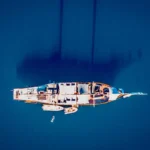
The extra day on a 4D3N liveaboard buys you north Komodo: the ridge walk above twin bays at Gili Lawa, plus more water time at sites the short itineraries skip. If you’ve seen a drone shot of a phinisi anchored between two turquoise bays — this is it.
Komodo Liveaboard Itinerary, Day by Day
Both durations run as a loop from Labuan Bajo, so you fly in and out of the same airport. The difference is not extra sites but breathing room: three nights lets you anchor at Gili Lawa and dive Batu Bolong properly instead of racing the tide.
3D2N — round trip from Labuan Bajo
| Day | Stops | On the water |
|---|---|---|
| 1 | Kelor, Menjerite, Kalong | Board late morning, snorkel at Kelor, swim at Menjerite, thousands of flying foxes leaving Kalong at dusk. Overnight at anchor |
| 2 | Padar, Pink Beach, Komodo, Manta Point | Pre-dawn climb on Padar, snorkel at Pink Beach, ranger-guided trek at Loh Liang, mantas at Karang Makassar in the afternoon |
| 3 | Siaba Besar, Kanawa | Green turtles at Siaba, last snorkel at Kanawa, back in Labuan Bajo before midday |
4D3N — round trip from Labuan Bajo
| Day | Stops | On the water |
|---|---|---|
| 1 | Kelor, Menjerite, Kalong | Board, three stops, flying foxes at sunset, overnight at Kalong |
| 2 | Padar, Pink Beach, Komodo Island | Sunrise on Padar, snorkel and beach time, ranger trek, overnight at Gili Lawa |
| 3 | Gili Lawa, Taka Makassar, Manta Point, Batu Bolong | Sunrise hike, sandbar stop, mantas, then Batu Bolong on the right tide. Overnight at Kanawa |
| 4 | Siaba Besar, Sebayur | Turtles and reef, return to Labuan Bajo before noon |
Padar and the Komodo Island trek both sit inside the national park, so the entry cap and fees described above apply on either duration.
Best Time for a Komodo Liveaboard
| Months | Season | Sea & weather | Crowds & prices | Why go |
|---|---|---|---|---|
|
April–June |
Early dry |
Calm seas, dry days, hills still green from the rains |
Moderate crowds, mid prices |
Sweet spot — best balance overall |
|
July–August |
Peak dry |
Best weather of the year |
Biggest crowds, highest prices — book 4–8 weeks ahead |
Prime season; permits sell out first |
|
September–November |
Late dry |
Calm seas, golden savanna views on Padar |
Thinner crowds than peak |
Sweet spot — quieter, same conditions |
|
December–March |
Wet |
Rain in short bursts; central park waters stay sailable |
Fewest boats, lowest prices |
Best manta season (Dec–Feb plankton bloom) |
The wet season is misunderstood. The trade-off is occasional itinerary reshuffles when wind picks up — which our captains handle by re-sequencing stops, not cancelling them.
The park is open year-round. There is no month where a Komodo liveaboard doesn’t run.
Getting to Labuan Bajo
Fly into Komodo Airport (LBJ), Labuan Bajo — ±1 hour from Bali (DPS) with multiple daily flights, or direct from Jakarta (±2.5 hours). The airport is 10–15 minutes from the harbor; transfer is included in your package.
Boarding for most departures is 08:00–09:00 at the harbor or Marina Waterfront. If you’re flying in the same morning, take the earliest Bali flight — or better, arrive the evening before. Labuan Bajo has solid accommodation at every budget, and it removes the single most common cause of missed boardings: delayed morning flights from Bali.
Which Phinisi Should You Book?
This is where we’re different from operators running one or two boats. We work across 20+ phinisi in the Komodo fleet, so we match the boat to your trip instead of selling you whatever we own:
- Budget shared-cabin phinisi — clean, AC cabins, full itinerary, lowest price point. [Browse All Deluxe/Shared Phinisi Boats]
- Mid-range private-cabin phinisi — en-suite bathrooms, better deck space. [Browse All VVIP Phinisi Boats]
- Luxury phinisi — master cabins with ocean-view windows, jacuzzi decks, crew ratios near 1:1. [Browse All Luxury Phinisi Boats]
Tell us your dates, group size, and budget on WhatsApp and we’ll shortlist 2–3 boats with live availability — usually within 7 minutes.
We Combine Licensed Local Captains, Traditional Phinisi Craftsmanship, and Full-Crew Service to Run the Most Trusted Komodo Liveaboard Fleet from Labuan Bajo
Why Travelers Book Their Komodo Liveaboard With Us
- Fixed, all-inclusive pricing — meals, snorkel gear, and transfers covered
- Komodo National Park permits arranged before departure (1,000 visitor/day cap)
- Licensed local guides and ranger-escorted dragon treks
- Overnight anchorage inside the park — Padar sunrise before day boats arrive
- Non-diver friendly: snorkeling, trekking, and deck itineraries
- Boats matched to your budget, not whatever we need to fill
- Crews and captains from Flores — your trip pays local
Choose your Komodo liveaboard duration:
The Largest Phinisi Liveaboard Fleet in Komodo Waters
Every phinisi we sail is a traditional wooden schooner built by the master boatbuilders of South Sulawesi — a craft recognized by UNESCO since 2017. We match travelers with the right vessel across our fleet, from shared-cabin open trips to fully private luxury charters.
Choose Your Komodo Liveaboard Tier
Phinisi Trip Indonesia organizes every Komodo liveaboard around three vessel tiers, so you match the boat to your budget and travel style — not the other way around. All tiers sail the same park highlights; the difference is the boat you sleep on.
VVIP Phinisi
The top of the fleet: 30–50 meter phinisi with master suites, near 1:1 crew-to-guest ratios, private chefs, and jacuzzi decks. Fully private charters only — built for honeymoons, families, and groups who want the park to themselves.
Luxury Phinisi
En-suite ocean-view cabins, refined interiors, and full crew service — the private Komodo liveaboard experience without the VVIP price tag. The most-booked tier for couples and small groups chartering 3D2N–4D3N.
Deluxe Phinisi
Well-equipped wooden boats covering every Komodo essential — AC cabins, full meals, snorkel gear, tender boats — at the most accessible charter rate. Ideal for groups of 8–15 splitting one boat.
Diving on a Komodo Liveaboard
Full dive guide: site-by-site slack water windows, certification minimums, the dive deck spec and seasonal access to south Komodo are all on the Komodo diving liveaboard page.
Not a diver? The same boats run a Komodo snorkeling liveaboard itinerary — surface-accessible sites, in-water guides, and no certification required.
Search results treat a Komodo liveaboard as a dive trip first, and the park earns it: more than 50 named sites, channel currents that feed everything on the reef, and manta stations you can only reach by boat. The best sites sit hours apart, which is exactly why divers sleep on the water here.
The park divides into three cruising areas:
- North — Castle Rock, Crystal Rock, Shotgun: current-swept pinnacles with schooling trevally and reef sharks; best with some drift experience.
- Central — Batu Bolong, Karang Makassar (Manta Point), Siaba, Tatawa: the classics most itineraries anchor on, and the highest manta odds.
- South — Manta Alley and Cannibal Rock in Horseshoe Bay: cooler, nutrient-rich water and world-class macro, at its best in the wet-season months when the north turns windy.
Mantas are resident year-round; the biggest aggregations ride the plankton of the rainy months around December to February — the same months visibility drops, so pick the trade-off that suits you.
You do not need to be an advanced diver to join. Central sites and snorkelling suit beginners, non-diving guests share the same boat without missing the dragons or Padar, and current-heavy northern sites are simply swapped per group. Dive equipment, guide ratios, and nitrox vary across the 130+ vessels in the fleet — confirm the dive setup for your specific phinisi when you book. See how the sites fit real schedules on the 3D2N route and the 4D3N route.
Frequently Asked Questions
Do I need to be a diver?
No. The standard Komodo liveaboard itinerary is trekking + snorkeling. Diving is an optional add-on on dive-equipped boats.
Is it safe for non-swimmers?
Yes. Life jackets are provided for all water stops, snorkel sites like Pink Beach are shallow and calm, and you can skip any water activity. The treks (Padar, dragon islands) don’t involve swimming at all.
How much does a Komodo liveaboard cost?
Open trips start from IDR 3,000,000 (±$185) per person for 3D2N and IDR 9,250,000 (±$570) for 4D3N, sharing cabin, meals included. Private charters start from IDR 39,000,000 (±$2,400) per boat per trip. Add IDR 250,000/day per person for park fees.
Can I book last minute?
Our boats carry life jackets for all pax, licensed crews, and sail routes inside the sheltered park waters — the longest open crossing is under two hours. If you’re prone to seasickness, take medication before the first morning crossing; most guests need nothing after that.
Do liveaboards run in rainy season?
Yes, year-round. December–February brings short rains and the best manta sightings. Captains adjust stop order around wind, not cancel trips.
Is the boat safe? What about seasickness?
Our boats carry life jackets for all pax, licensed crews, and sail routes inside the sheltered park waters — the longest open crossing is under two hours. If you’re prone to seasickness, take medication before the first morning crossing; most guests need nothing after that.
Travelling with a group of eight or more? A private Komodo luxury cruise often costs the same per head as cabins on a scheduled boat.