

Banda Sea Liveaboard — Hammerhead Crossings & Spice Islands Diving
Plan your Banda Sea liveaboard with Phinisi Trip — private phinisi charters and scheduled crossings between Ambon and Sorong, running only twice a year.
A Banda Sea liveaboard is the only way to dive this region. There are no resorts on the volcanic islands, no day boats running out to the seamounts, and no road that reaches any of it. The dive sites sit in open ocean between Maluku and the Forgotten Islands, one to two days of sailing apart, and the boats that visit them are only there for a few weeks each year. That constraint is the whole appeal: these reefs see a fraction of the divers Komodo or Raja Ampat do, and the pelagic action — schooling scalloped hammerheads over deep drop-offs — is among the most reliable anywhere in Indonesia.
Phinisi Trip Indonesia sails the Banda Sea only as a repositioning crossing, twice a year, when the fleet moves between Komodo season and Raja Ampat season — which is why these dates never repeat, and why our Indonesia liveaboard calendar treats them as their own window. Because we operate the boats ourselves, you book at direct rates, and your route is planned by crews who have made this passage before — not resold through a marketplace.
Banda Sea Dive Sites
The Banda Islands
Coral that regrew from bare rock after the 1988 Gunung Api eruption, now one of the fastest documented reef recoveries in Indonesia. Staghorn thickets in the shallows, dropping into dark volcanic sand.
The Volcanic Seamounts
The Forgotten Islands
The Eastern Reefs
Healthy hard coral and a resident population of napoleon wrasse, on a gentler profile that suits the first or last day of a crossing.
A sloping reef off Nusa Laut with excellent macro and a good dusk dive. A soft landing after the open-ocean days.
Nobody Plans the Crossing Direction But Us
Why We Dive the Seamounts on a Schedule
Hammerheads in the Banda Sea are a current phenomenon, so we don’t dive the seamounts in whatever order is convenient. Serua, Suanggi, and Nil Desperandum get scheduled for the tide state that brings cool, plankton-rich water up the drop-off, which usually means early morning and a negative entry. Get the timing wrong and you have a pleasant wall dive. Get it right and you have the reason you came.
Banda Sea Liveaboard Itinerary, Day by Day
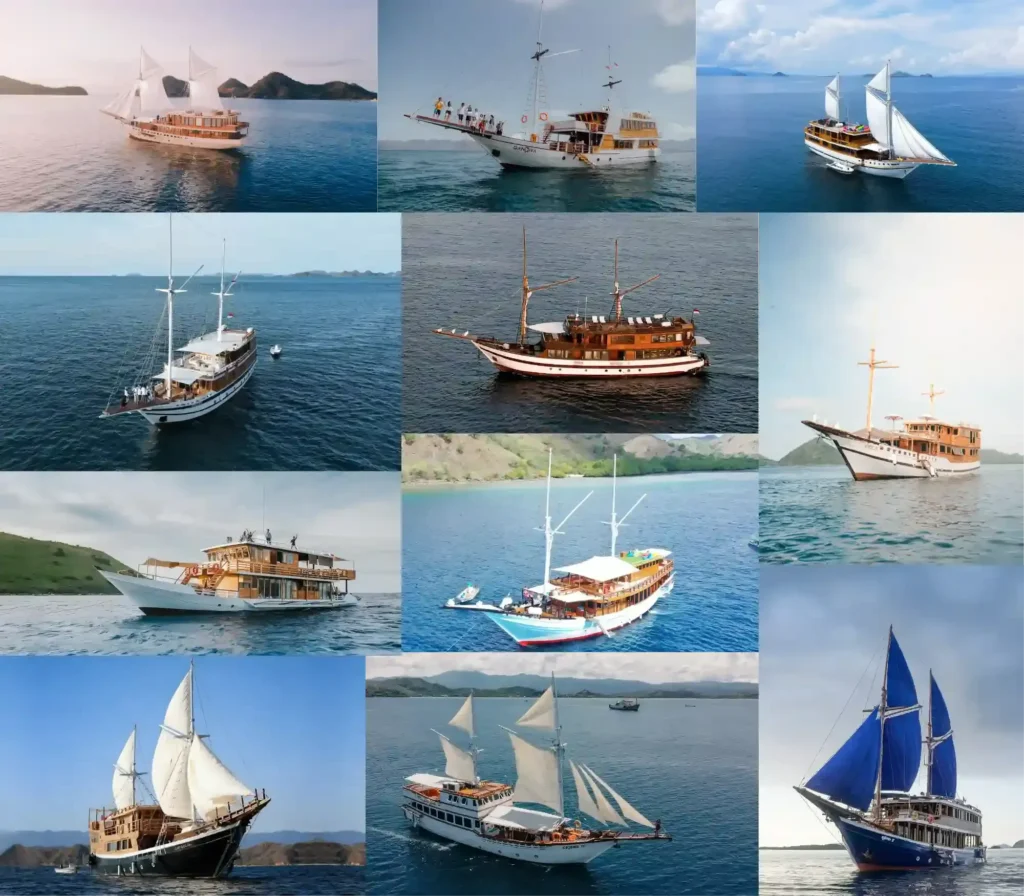
The crossing runs Ambon to Saumlaki or the reverse, and the direction is set by the monsoon rather than by preference. Below is the eastbound route. Westbound covers the same islands in reverse, finishing with the Ambon muck sites instead of opening with them.
11 nights — Ambon to Saumlaki
| Day | Area | Diving |
|---|---|---|
| 1 | Ambon | Board in the afternoon, check dive on the Laha black sand, briefings |
| 2 | Nusa Laut | Ameth hard coral gardens, dusk dive, then the overnight run east |
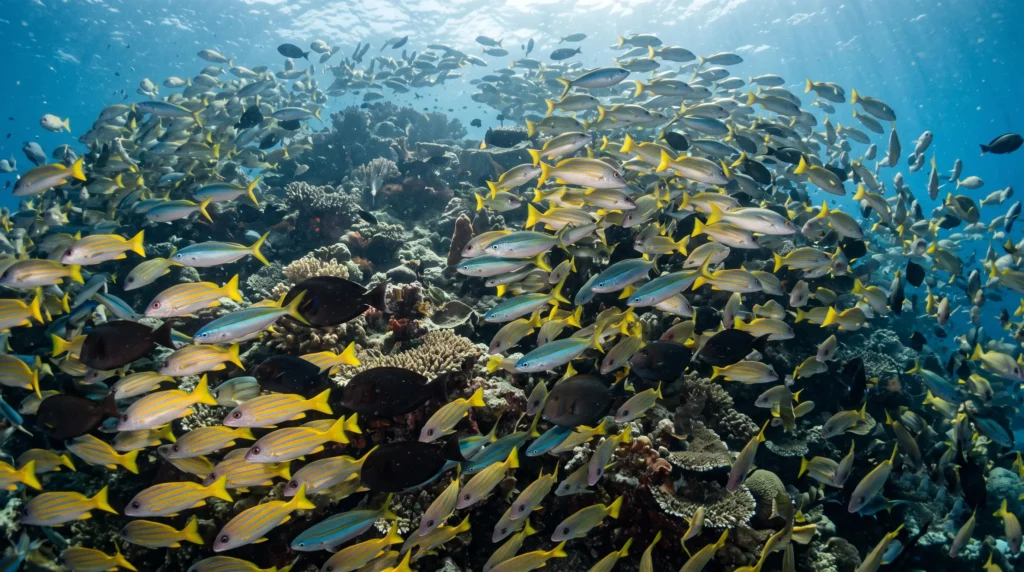
| 3 | Koon | Too Many Fish on the incoming tide, one of the densest fish aggregations in Indonesia |
| 4 | Banda Neira | Hatta and Ai walls, afternoon walk through the old nutmeg town and Fort Belgica |
| 5 | Banda Islands | Run, Batu Kapal and the Gunung Api lava flow, mandarinfish at dusk |
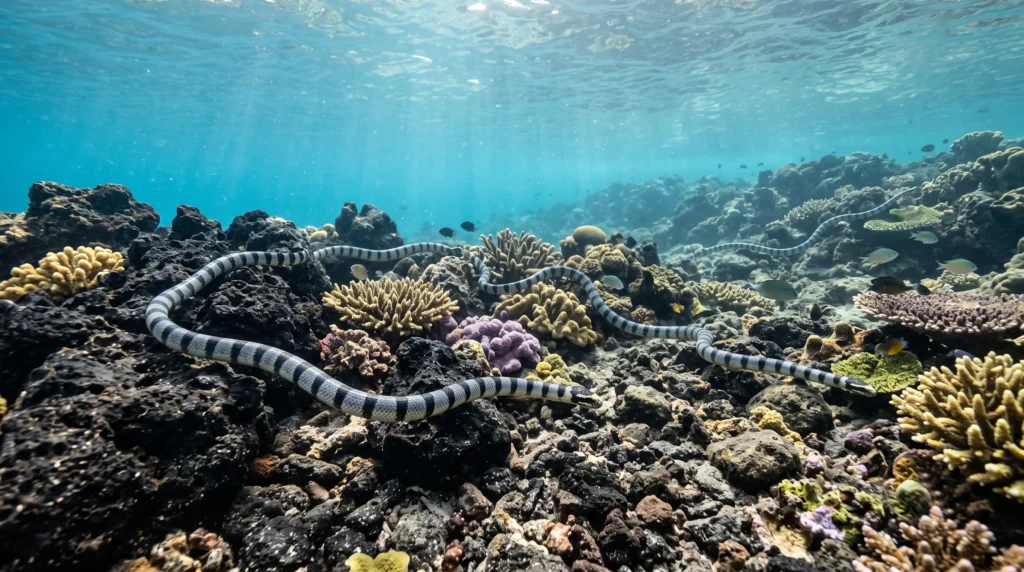
| 6 | Manuk | Sea snake island. Hundreds of banded sea kraits, hammerhead potential on the deep corner |
| 7 | Serua | Volcanic seamount, schooling fish, strong current dives on a schedule |
| 8 | Nila | Black sand slopes under the volcano, macro and wide angle in the same day |
| 9 | Dai | Sheer walls in the Forgotten Islands, big pelagic traffic |
| 10 | Terbang Selatan and Utara | Untouched reef, rarely dived by anyone |
| 11 | Nil Desperandum and Damar | Atoll diving, last dives of the crossing |
| 12 | Saumlaki | Disembark after breakfast, transfer to the airport |
Manuk and Serua are the two days that justify the whole crossing, and both are weather-dependent. If the sea denies us a seamount we substitute rather than force it.
When to Go
| Months | Direction | Sea state | What's running |
|---|---|---|---|
|
Late Sep – Nov |
Ambon → Sorong |
Calmest of the year |
Peak crossing season |
|
Mar – Apr |
Sorong → Ambon |
Calm, occasional swell |
Second crossing window |
|
Dec – Feb |
No crossings |
Northwest monsoon |
Fleet in Raja Ampat |
|
May – Aug |
No crossings |
Southeast monsoon |
Fleet in Komodo |
What a Banda Sea Crossing Costs
Here is the part almost nobody frames honestly: because the boats are repositioning regardless, crossing itineraries often work out lower per night than the same vessel in peak Komodo or Raja Ampat season. It is the best value window in the Indonesian liveaboard calendar.
| Tier | Cabin | Per person / night | 11-night crossing |
|---|---|---|---|
|
Deluxe |
Shared twin |
– |
– |
|
Luxury |
Private en-suite |
– |
– |
|
VVIP |
Suite |
– |
– |
|
Private charter |
Whole vessel |
– |
– |
The Logistics Nobody Prices In
A crossing ends where it ends, so you fly into one city and out of another. Ambon (AMQ) and Sorong (SOQ) are roughly 1,200 km apart with no direct connection — you route through Jakarta, Makassar, or Manado on both legs. Budget two separate one-way domestic tickets rather than a return, and add a night in the arrival city before boarding. Flights into Ambon are limited enough that a missed connection means missing the boat entirely.
| Leg | Route | Connect via | Plan for |
|---|---|---|---|
|
Arrival |
International → Ambon (AMQ) |
Jakarta / Makassar |
One night before boarding |
|
Departure |
Sorong (SOQ) → International |
Jakarta / Makassar / Manado |
One night after disembarking |
|
Reverse season |
Sorong in, Ambon out |
Same hubs |
Same buffer both ends |
Choosing Your Route Length
| Length | Covers | Hammerhead sites | Best for |
|---|---|---|---|
|
8D7N |
Banda Islands + one seamount |
1–2 |
Tight schedules |
|
11D10N |
Banda Islands + volcanic arc |
3–4 |
The standard crossing |
|
12D11N |
Adds a Forgotten Islands atoll |
4–5 |
Most popular |
|
14D13N |
Adds Koon and the eastern reefs |
5–6 |
Full region |
That table is the whole route-planning framework: an 8D7N stays close to the Banda Islands and gives you one honest shot at a hammerhead site, while 11 and 12 nights open the volcanic arc where the odds actually live. Fourteen adds Koon and the eastern reefs. If hammerheads are the reason you are coming, eleven nights is the realistic floor.
What You'll See
Experience Required
What's Included
Every crossing includes: all meals on board (Indonesian and Western, cooked fresh daily), up to four dives a day including night dives where conditions allow, tanks and weights, dive guides, tenders, drinking water, tea and coffee, cabin service, and airport transfers at both ends.
Not included — budget for these:
- One-way domestic flights (Ambon and Sorong are separate tickets)
- Overnight hotel before boarding and after disembarking
- Nitrox fills
- Dive equipment rental
- Travel and dive insurance covering open-ocean diving
- Crew gratuities
- Alcoholic drinks
Built for the Crossing
Harnessing Decades at Sea to Craft Effortless Banda Sea Liveaboard Adventures
- Save time with a fully organized itinerary
- Travel safely with licensed local dive guides
- Dive the right region for any month — we sail year-round
- Minimize stress with an all-inclusive package
- Create memories that last a lifetime
- Skip the guesswork of one-way Ambon and Sorong logistics
- Support local crews and the island communities of Maluku
Choose your liveaboard adventure length
Delivering Premium Phinisi Voyages for a Safer, More Memorable Journey
Empowering travelers with premium phinisi voyages that combine comfort, safety, and adventure — delivering unforgettable dive trips across Indonesia while supporting local crews and coastal communities.
Choose Your Vessel
Phinisi Trip Indonesia runs every route — from Komodo to Raja Ampat and the far crossings in between. Every vessel on a Banda Sea itinerary carries additional equipment for open-ocean diving: surface marker buoys, personal locator devices, and a tender that stays in the water throughout each dive.
VVIP Phinisi
Our largest and most appointed phinisi. Suites with private terraces, dedicated camera stations, and tenders large enough for open-ocean transfers in comfort. Best for groups chartering the boat for the full crossing.
Luxury Phinisi
The sweet spot for Banda Sea crossings. Air-conditioned cabins, en-suite bathrooms, a properly laid-out dive deck, and cruise directors who have run this route before.
Deluxe Phinisi
Comfortable, well-run vessels for divers who would rather put budget into a longer crossing than a larger cabin. Same dive sites, same crew standards, simpler accommodation.
Frequently Asked Questions
How much diving experience do I need for the Banda Sea?
Advanced Open Water and around fifty logged dives is the standard requirement, and some vessels ask for more on the seamount legs. The diving involves open-ocean drift, deep profiles, and blue-water hangs with no visual reference. Divers with fewer than fifty dives are better off starting in Komodo or Raja Ampat.
How much does a Banda Sea liveaboard cost?
Compare per person per night rather than per trip, since these itineraries are three to four times longer than a Komodo trip. Because the boats are repositioning between seasons, per-night rates are often lower than the same vessel in peak season. Message us with your dates and we will confirm current rates by tier and cabin type.
When is the best time to go?
October, if your calendar allows it — calmest seas, peak hammerhead activity, and the clearest water of the year. The full crossing windows are late September to November and March to April. Outside those months no Banda Sea itineraries run at all.
Where do Banda Sea liveaboards depart from?
Ambon (AMQ) in Maluku is the main port, with Sorong (SOQ) at the Raja Ampat end. Crossings run one direction or the other depending on the season, so you typically fly into one city and out of the other. Both connect through Jakarta, Makassar, or Manado.
Will I have phone signal or internet on board?
Plan to be offline, and more completely than in Raja Ampat. Coverage fades within a few hours of Ambon and there is none at all around the volcanic seamounts. Tell people at home before you sail that you will be uncontactable for most of the trip.
Can non-divers or snorkelers join?
Snorkelers can join, but be honest about the trade-off. The reefs around the Banda Islands and Nusa Laut snorkel beautifully, and Banda Neira gives you real shore time among the nutmeg plantations and forts. The seamount days, though, are built around deep pelagic dives with little to see at the surface. Non-divers generally get more from Komodo or Raja Ampat.
Should I pick a shorter crossing or the full 12-night route?
Eight nights covers the Banda Islands and gives you one honest attempt at a hammerhead site. Eleven and twelve nights open the volcanic arc and the Forgotten Islands, where the odds actually live. If hammerheads are the reason you are coming, eleven nights is the realistic floor — and twelve is the length most of our guests end up choosing.