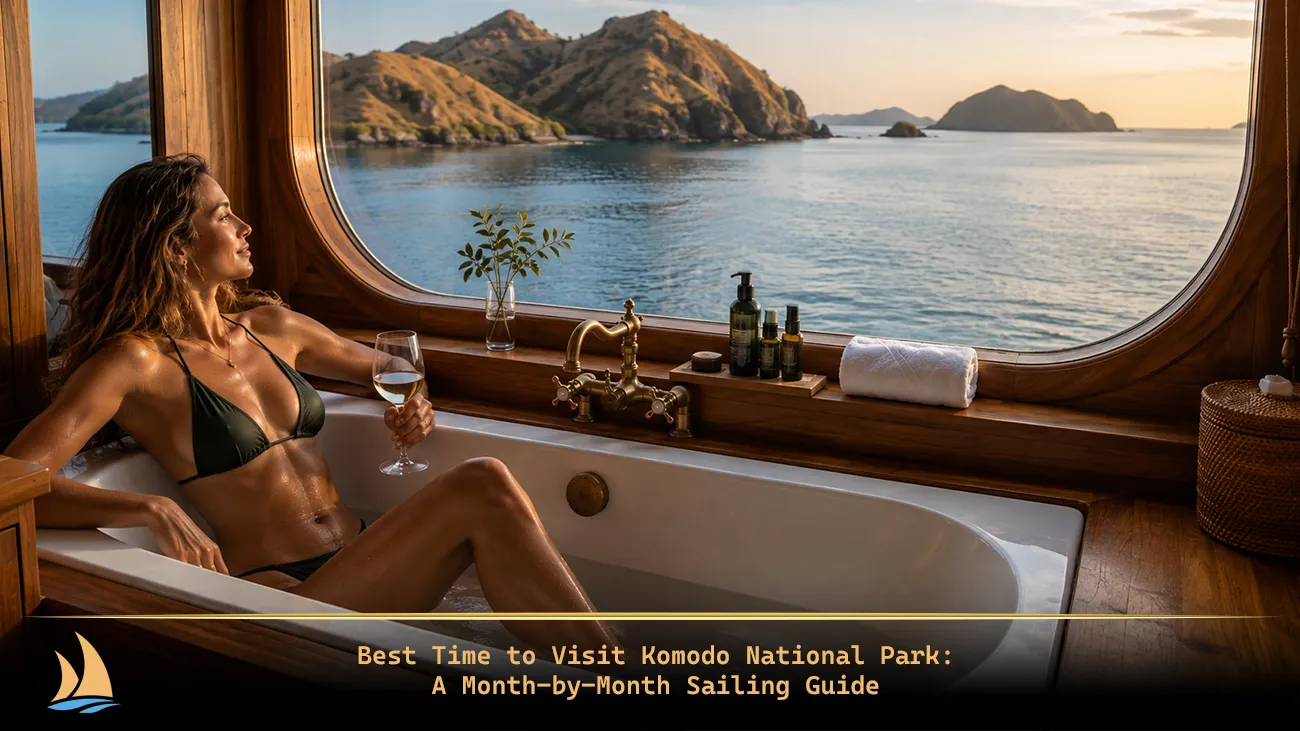

That is the headline. The rest of this guide is what actually happens each month: the sea state, the light, the wildlife, the crowds, the prices — and, since April 2026, the visitor quota that has quietly turned when should I go into when should I book.
The short answer: the best time to visit Komodo National Park is the dry season, April through October, with May to early October the strongest window for sailing. Seas are calmest, underwater visibility is at its best, and the islands still hold colour from the rains. Late January to early March is the window to avoid — the water gets rough enough that some boats stay in port.
In this guide
Komodo Has Two Seasons, Not Four
Komodo does not behave like the rest of tropical Indonesia. While Sumatra and Kalimantan sit under humid rainforest skies most of the year, the Komodo archipelago is one of the driest corners of the country — closer in feel to northern Australia than to Bali. The hills are savannah, not jungle. For most of the year they are gold and dry.
The dry season runs roughly April to October. The southeast monsoon brings steady wind, clear skies and very little rain. This is when the park looks like its photographs.
The wet season runs roughly December to March. The northwest monsoon reverses the wind, brings afternoon storms, and turns the savannah green within a few weeks. Rain here is rarely all-day drizzle; it is short, heavy and usually arrives in the afternoon. The problem for travellers is not the rain itself — it is the wind and the swell that come with it.
November and April are the transition months, and both are underrated. April in particular catches the park at its best-looking: still green from the rains, but with the seas already settling.
One thing worth understanding early: rain and sea state are not the same problem. A wet morning barely affects a snorkelling day. A heavy swell on the crossing to the southern sites cancels it. When you are choosing the best time to visit Komodo National Park, what you are really choosing is sea state.
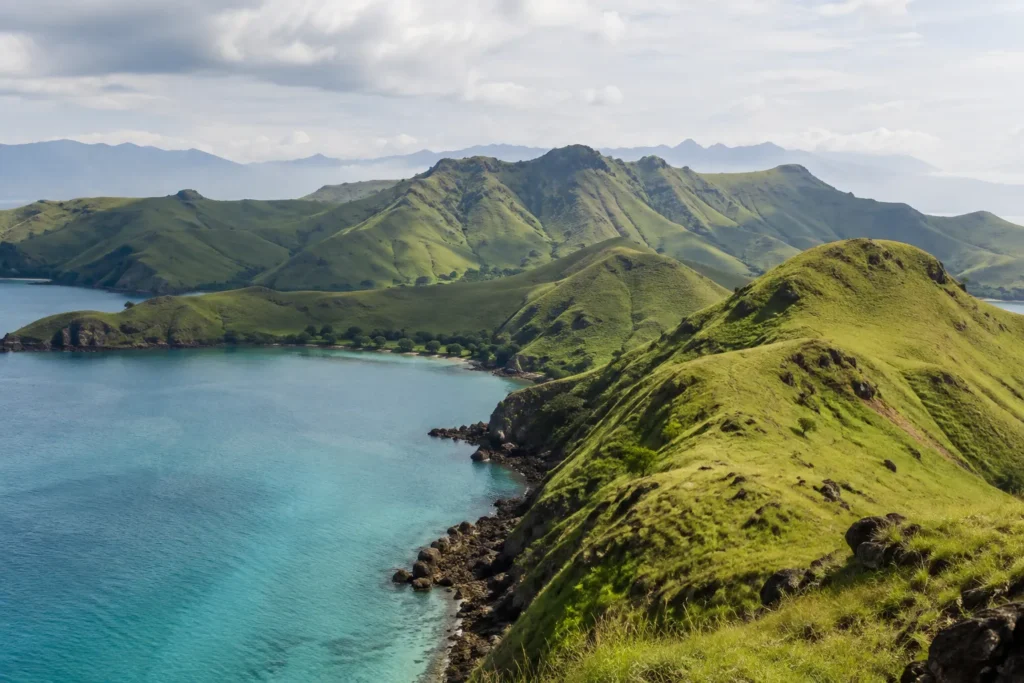
Komodo Green Hills in April
Best Time to Visit Komodo National Park, Month by Month
| Month | Rain | Sea state | Visibility | Crowds | Price | Verdict |
|---|---|---|---|---|---|---|
| January | High | Rough | Variable | Very low | Lowest | Avoid for sailing |
| February | High | Roughest | Variable | Very low | Lowest | Avoid |
| March | Easing | Improving late | Improving | Low | Low | Second half only |
| April | Low | Calm | Good | Moderate | Moderate | Excellent |
| May | Very low | Calm | Very good | Moderate | Moderate | Excellent |
| June | Very low | Calm | Very good | Rising | Rising | Excellent |
| July | Lowest | Calm, stronger currents | Very good | Peak | Peak | Very good |
| August | Lowest | Calm, stronger currents | Good | Peak | Peak | Very good |
| September | Low | Calm | Very good | Easing | Highest | Excellent |
| October | Low | Calm | Good | Low | Moderate | Very good |
| November | Rising | Mixed | Good | Low | Low | Good value |
| December | Rising | Mixed | Good | Holiday spike | Mixed | Good, with caveats |
January
The wettest stretch of the year and the start of the roughest seas. Boats still sail, and the islands are spectacularly green, but crossings get uncomfortable and southern sites are frequently off the table. Prices are at their floor and the harbour is quiet. Manta activity, however, is at its strongest.
February
Statistically the hardest month. Wind and swell peak, and a meaningful share of departures get rerouted. If you have inflexible dates and a low tolerance for motion, this is not your month.
March
The first half still belongs to the wet season. From mid-March the wind typically eases, the swell drops, and conditions become workable again. Late March is a genuine bargain: green hills, low prices, improving seas — with the caveat that the turn is not on a fixed date and some years run late.
April
Many crews will tell you this is the best month of the year, and it is hard to argue. The islands are still green from the rains, temperatures are comfortable rather than punishing, the seas have settled, and the crowds have not yet arrived. April also catches the tail of manta season. If you want Komodo green rather than gold, book April.
May
April’s conditions with more reliability. Rainfall is minimal, seas are calm, underwater visibility is climbing toward its annual best. The hills begin turning from green to gold through the month, and prices are still pre-peak. For most travellers, May is the single best compromise across every variable.
June
Solidly dry, calm and clear. Crowds and prices begin their climb toward the July and August peak, but the park does not yet feel busy. Manta activity remains good. Note that Komodo dragon mating season begins around now, which makes the dragons less visible on treks.
July
The driest month and the start of the true high season. Conditions are excellent across every activity. Two things change: currents strengthen, and water temperature drops slightly — cool upwelling from the south brings it to around 25 to 27°C, cool enough that many divers want a thicker wetsuit than they expected. Popular snorkel sites fill with day boats.
August
Peak season in full. Dry, sunny, reliable — and the most expensive, most crowded month of the year. Book far ahead or accept whatever vessel is left. If you can move your dates two weeks either side, you will get near-identical conditions for meaningfully less money and with fewer boats at each anchorage.
September
The month experienced sailors quietly recommend. You get July’s conditions without August’s crowds or prices. Seas are calm, visibility is at or near its annual best, and the harbour has thinned out. For honeymoons and photography trips, September is the strongest pick of the year.
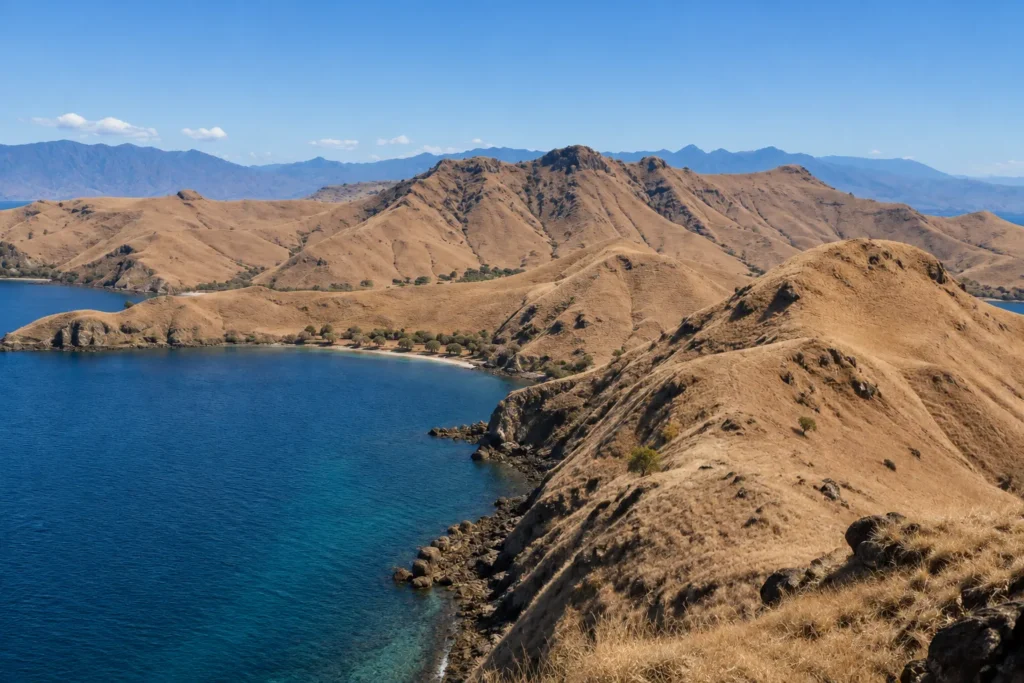
Komodo Golden Savannah in September
October
The last confident month of the dry season. Warm, dry, quiet. The savannah is at its most golden and the trekking tracks are dusty and clear. Occasional early rain arrives late in the month in some years, but conditions remain reliable.
November
The transition back. Rain returns in short afternoon bursts, the hills start greening, and prices soften. Sea state becomes less predictable — mostly fine, occasionally not. Good value if you are flexible and not chasing guaranteed conditions.
December
A month of two halves. Conditions are generally still workable, and manta activity picks up strongly as plankton returns. But the Christmas and New Year window is a sharp price and demand spike that behaves like high season despite the weather. Early December is quiet and good value; late December is neither.
What the Sea Actually Feels Like on a Phinisi
Most seasonal guides are written by people who have taken a day trip. They will tell you the weather. They will not tell you what an overnight anchorage feels like in a wooden hull in September versus February — and that is the part that determines whether you sleep.
A traditional phinisi is a heavy, deep-hulled wooden vessel. It sits well in the water and it is not a small speedboat slamming through chop. But it also has no fin stabilisers. In practical terms:
Crossings are where you feel the season. The long legs — Labuan Bajo out to the park, and especially anything heading south toward the more exposed sites — are the sections that get uncomfortable in the wet season. Inside the sheltered channels between Komodo, Rinca and Padar, conditions stay far calmer than an open-water forecast suggests. This is why two boats on the same day can report completely different experiences.
Overnight anchorages matter more than daytime conditions. A rolly night at anchor ruins a trip faster than a wet afternoon. In the dry season the standard anchorages behind the islands are glassy. In January and February, swell wraps around headlands and some anchorages become genuinely uncomfortable, which is why itineraries get reshuffled in those months.
Vessel choice partly offsets the season. A larger vessel with more displacement rides the shoulder months noticeably better than a small boat. If your dates are fixed in November or March, moving up a size class does more for your comfort than any other single decision.
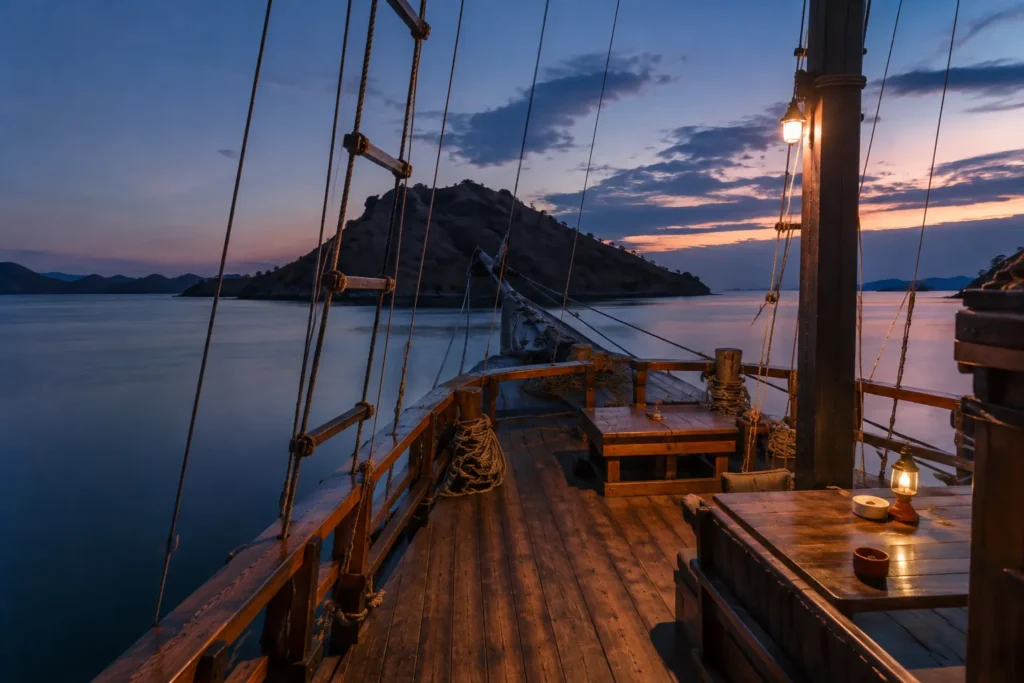
Phinisi Deck at a Calm Anchorage
Komodo’s Wildlife Calendar
For some travellers the best time to visit Komodo National Park is decided entirely by one animal, so here is the wildlife calendar.
| What you want to see | Best months | Notes |
|---|---|---|
| Manta rays | December – March peak | Sightings continue year-round at Karang Makassar |
| Komodo dragons | April – October | Less visible during mating season, roughly June – August |
| Whale sharks | April – June | Opportunistic, never guaranteed |
| Coral and reef fish | April – October | Follows visibility |
Manta rays
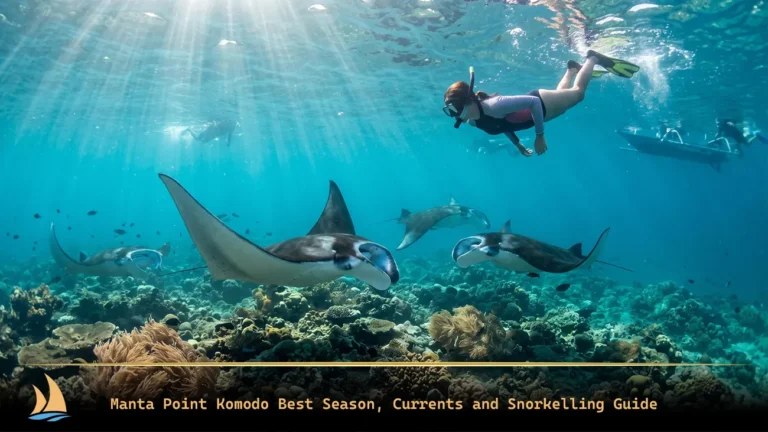
The counterintuitive one. Manta season peaks in the wet months, December through March, when plankton blooms draw large aggregations to the feeding stations. That is the same stretch with the roughest seas — a real trade-off. The good news is that mantas are seen at Karang Makassar throughout the year, so a dry-season trip is far from a write-off. April, sitting at the tail of the bloom with calm water, is arguably the best manta-plus-comfort compromise of the year.
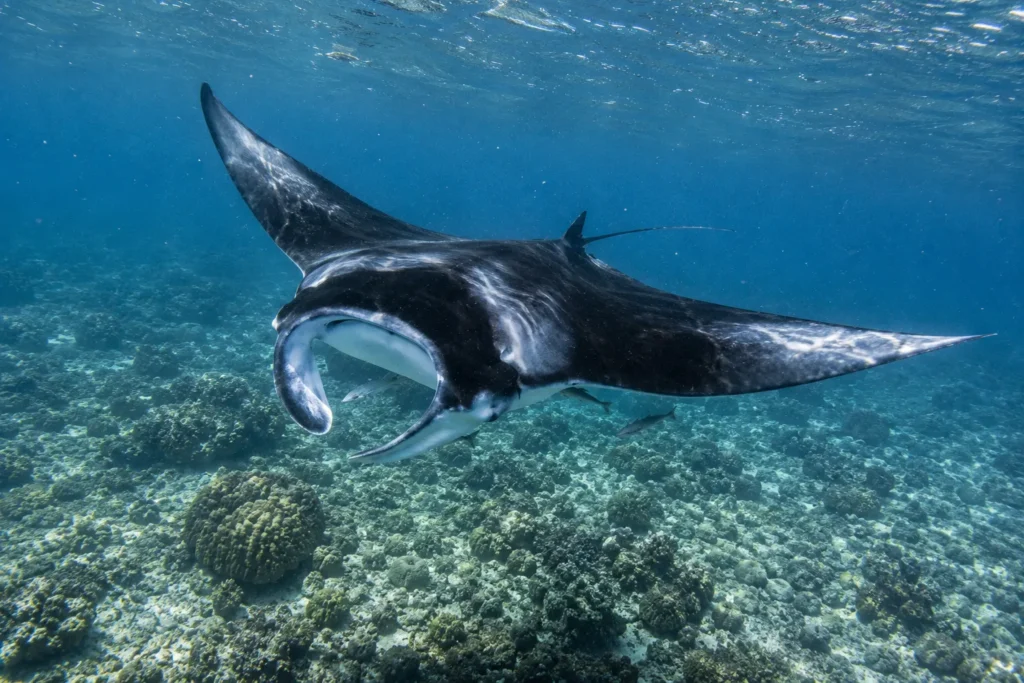
Manta Ray at Karang Makassar
Komodo dragons
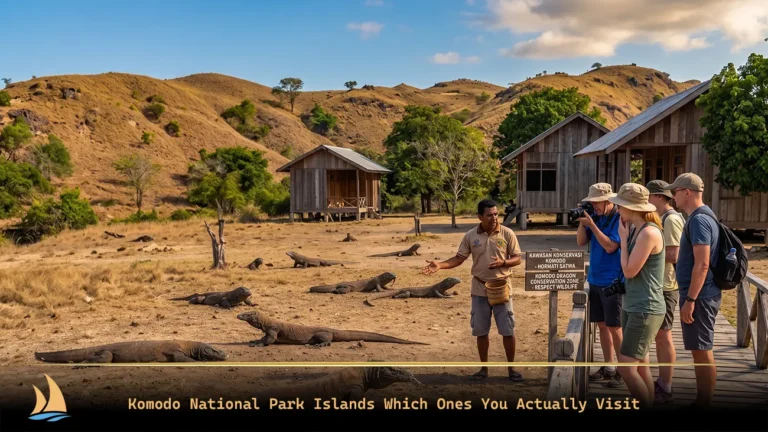
Dragons are most active and most visible across the dry season, April to October, and most reliably seen early — before around 10am, while it is still cool. Mating season, roughly June through August, is the exception: males become preoccupied and dragons spend more time out of sight. Rangers know the territories and sightings still happen, and you may even see males sparring, but do not plan an August trip around guaranteed dragon photographs. Which island you trek on also shifts the odds — see our comparison of Komodo Island versus Rinca.
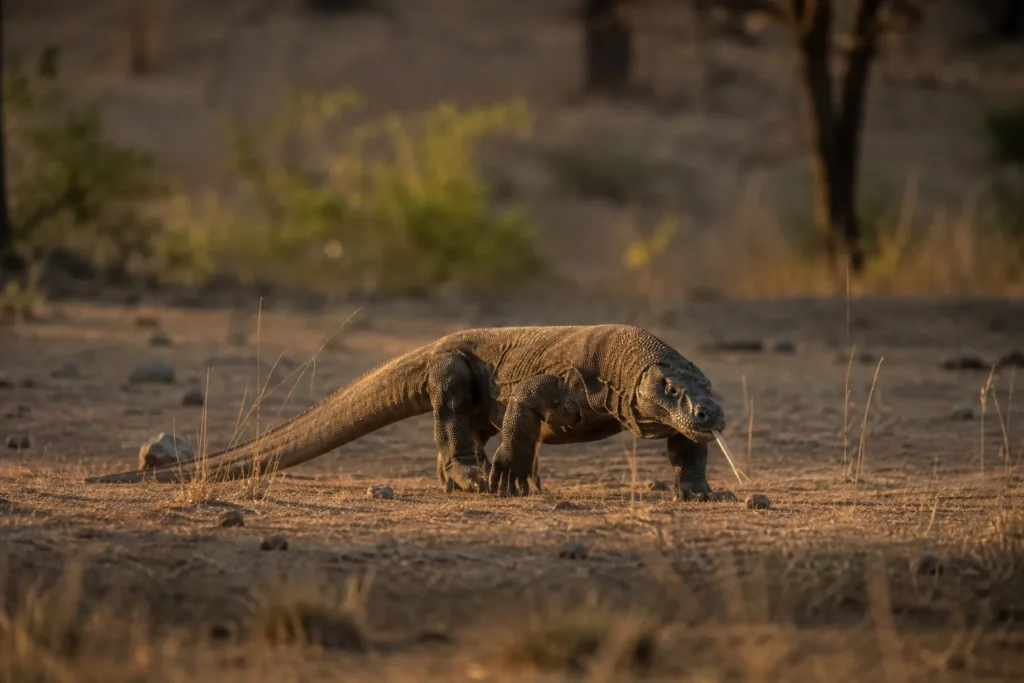
Komodo Dragon in Early Morning Light
Whale sharks and pelagics
The April to June window carries the best chance of a whale shark encounter. It is genuinely opportunistic — treat any sighting as a windfall rather than an itinerary item, and be sceptical of any operator who implies otherwise.
Best Month by Traveller Type
| You are a… | Go in | Why |
|---|---|---|
| First-time visitor | May or September | Widest margin for error: calm seas, clear water, manageable crowds, mid-range prices |
| Photographer | April or September | Green hills in April, cleanest light and thinnest crowds in September |
| Diver | July – September | Best visibility and pelagic activity; expect stronger currents and cooler water |
| Manta-focused snorkeller | December – March, or April | Peak aggregations in the wet months; April for the calm-water compromise |
| Honeymooner | September | Peak-quality conditions without August’s crowds or prices |
| Family with young children | May, June or October | Calmest seas, least motion, shortest queues at ranger posts |
| Budget traveller | Late March or November | Shoulder pricing with conditions that usually hold |
| Fixed, inflexible dates | Any dry-season month — but book early | See the quota section below |
The 2026 Quota Has Changed When You Should Book
This is the part most guides to the best time to visit Komodo National Park have not caught up with.
Since 1 April 2026, Komodo National Park operates under a daily visitor cap of 1,000 people across the entire park, with all entries handled through a pre-booking system. There are no walk-in tickets. The cap applies to everyone equally — day-trippers, liveaboard guests, divers, snorkellers and land visitors alike — and individual sites carry their own smaller sub-limits.
The practical consequence: choosing a good month is no longer enough. Across the July to October stretch, slots go well before the travel date, and a last-minute peak-season visit has become effectively impossible. If your dates are fixed, the booking decision now needs to happen months ahead of the trip, not weeks.
Multi-day liveaboards carry an advantage here, since permits are generally tied to a vessel’s scheduled departure rather than secured individually on the day. If you are travelling in peak season, that scheduling certainty is worth more than it used to be. Park rules and fees are still settling — always confirm current requirements through the official park booking portal before you travel.
The Months to Avoid — and the Honest Exception
If you want the simplest possible rule for the best time to visit Komodo National Park: avoid late January to early March. Wind and swell peak, crossings get uncomfortable, southern sites are often unreachable, and some boats stay in port. If your trip is short and your dates are locked, the risk of losing a day to weather is real.
Now the counter-argument, because it is a good one.
In those same months the park is at its emptiest. The hills are a green you will not see in August. Manta aggregations are at their annual peak. Prices are at their floor across boats, flights and hotels. And the underwater world barely notices the rain — sheltered sites hold reasonable visibility through the wet season.
If you are an experienced traveller, you do not get seasick, you have booked a larger vessel and you have a spare day in your schedule, a February trip can be the best-value week you will ever spend in Komodo. Just go in knowing the itinerary may change, and choose a boat and a crew you trust to make that call safely.
Frequently Asked Questions
What is the best month to visit Komodo National Park?
The best time to visit Komodo National Park is May or September, the strongest all-round months. Both sit inside the dry season with calm seas and excellent visibility, but neither carries August’s crowds or peak pricing. April is the best month if you want the islands green rather than gold.
Can you visit Komodo during the rainy season?
Yes. The park is open year-round and boats sail through the wet season. Expect short, heavy afternoon showers rather than all-day rain. The real constraint is sea state, not rainfall — late January to early March is when swell most often forces itinerary changes.
When is the cheapest time to visit Komodo?
November through March, excluding the Christmas and New Year period, carries the lowest prices across boats, flights and accommodation. Late March offers the best balance of low prices and improving conditions.
When is manta ray season in Komodo?
Manta activity peaks from December to March, when plankton blooms draw large aggregations to the feeding stations. Sightings continue year-round at Karang Makassar, so a dry-season trip still offers a good chance of an encounter.
Do Komodo boat trips get cancelled by weather?
It happens, most often between January and early March, and usually as a reroute rather than an outright cancellation — the crew swaps an exposed site for a sheltered one. Ask your operator how they handle weather changes before you book, and build a buffer day into wet-season trips.
How far in advance should I book?
For July to October, several months ahead. Since the daily visitor cap took effect in April 2026, peak-season park slots are secured long before the travel date, and vessels fill accordingly.
Ready to Pick Your Dates?
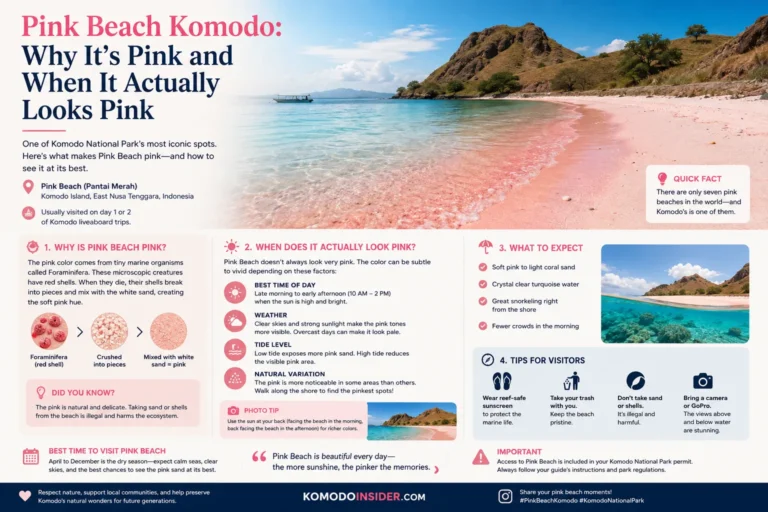
Once you have settled on the best time to visit Komodo National Park, the next question is the vessel and the route. If you are timing the trip around the Padar sunrise trek or the light at Pink Beach, both have their own guides. Our Komodo tour packages cover both open trips and private charters, and our Indonesia liveaboard itineraries extend the same sailing into Raja Ampat and the Banda Sea. If you already know the experience you want, our team can match it to a departure — check current availability.